
Treatment Overview
Diagnosis: Type 2 diabetes, diabetic nephropathy, ketoacidosis, hypertension, hyperlipidemia, and 6 other conditions (11 diagnoses in total).
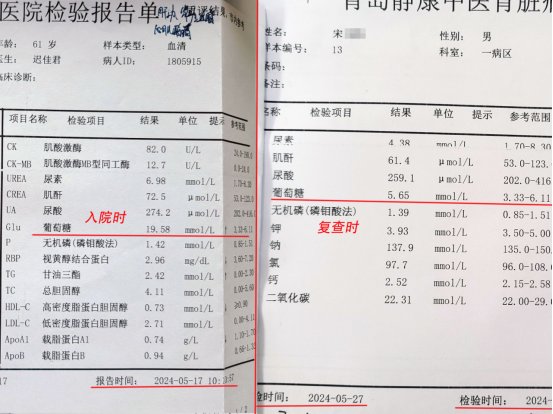
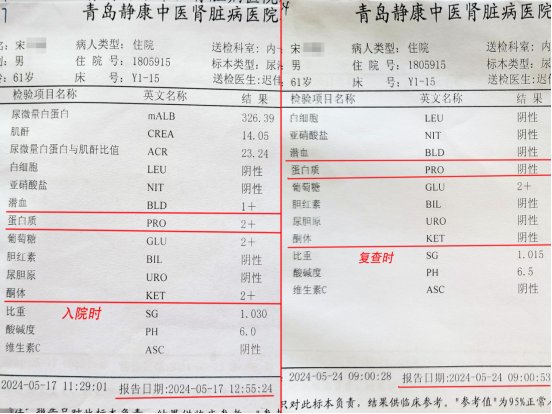
At Admission: Fasting blood glucose as high as 19.58 mmol/L, urine protein 2+, occult blood 1+, the disease had already affected the kidneys. The tongue coating occasionally bled, scleral congestion, dry mouth with excessive thirst, blurred vision, dizziness, generalized fatigue, and copious foamy urine.
At Discharge: Fasting blood glucose 5.65 mmol/L, controlled within the standard range, urine protein and occult blood turned negative, tongue coating recovered, and all uncomfortable symptoms disappeared.

Treatment Experience
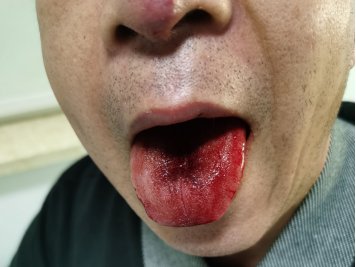
Recently, President Wang Tiemin received a patient whose tongue coating was bleeding — a rare tongue manifestation that genuinely startled the medical staff present.
The patient, Mr. Song, had been diagnosed with diabetes for 6 years. On a friend's recommendation, he chose to come for integrated Chinese-Western medical treatment to regulate his blood sugar.
In 2021, our hospital formally established a medical consortium partnership with Qilu Hospital of Shandong University (Qingdao), further strengthening precise diagnosis and treatment while expanding into endocrine and metabolic diseases such as diabetes and gout, as well as hypertension and cardiovascular-cerebrovascular rehabilitation. The hospital has also been approved as a member unit of the Heart Failure Specialized Disease Consortium of the National Center for Cardiovascular Diseases and a sub-center of the Hypertension Specialized Disease Consortium. Many patients seek our integrated Chinese-Western approach for managing chronic conditions like diabetes and hypertension, achieving simultaneous treatment of both symptoms and root causes through comprehensive systemic regulation.
Mr. Song's tongue was bright red with occasional bleeding. From a TCM tongue diagnosis perspective, this indicated yin deficiency with internal heat, pathogenic factors entering the nutrient-blood level, insufficient stomach yin, and phlegm-heat coagulation — a typical tongue manifestation in diabetic patients. Relevant examinations revealed a fasting blood glucose of 19.58 mmol/L, urine protein 2+, occult blood 1+, indicating the disease had already affected the kidneys, accompanied by severe signs of ketoacidosis — a serious and challenging condition.
During subsequent interactions, attending physician Chi Jiajun learned that Mr. Song had discovered elevated blood sugar 6 years ago but, because he didn't feel any particular discomfort, he never took it seriously. He had never received regular treatment, never used any blood sugar-controlling medications, and had never managed his diet with low-sugar principles.
This is a common trap that many chronic disease patients fall into. Even though they know their blood sugar or blood pressure is elevated, due to insufficient understanding of the disease, they don't take it seriously, leading to disease progression involving multiple organ damage — by then, it's too late for regrets.
The Harm of Diabetes Goes Beyond "Sugar"
Among chronic diseases, the harm caused by diabetes is arguably second to none.
1. Cardiovascular Disease
Cardiovascular disease is the most common chronic complication of diabetes. Approximately three-quarters of diabetic patients die from cardiovascular complications. Due to impaired sensory nerves, diabetic patients may not feel obvious pain during angina attacks or acute myocardial infarctions — they may only experience symptoms such as chest tightness, palpitations, dizziness, and fatigue.
2. Diabetic Nephropathy
Diabetic nephropathy is a common microvascular complication of diabetes. It has an insidious onset — early kidney damage may present without any symptoms. As the disease progresses, foamy urine and hypertension may gradually appear, and in severe cases, it can lead to renal failure. Patients with concurrent diabetic nephropathy tend to progress more rapidly compared to ordinary kidney disease patients, making it essential to take this condition seriously.
In addition, diabetes can cause retinopathy, peripheral neuropathy, and skin infections that are difficult to heal.
Mr. Song had also developed multiple complications due to inadequate blood sugar control.
After systematic integrated Chinese-Western treatment with the "Meridian Kidney-Protection Therapy Device," the patient's condition was brought under control. Currently, Mr. Song's urine protein and occult blood have turned negative, his kidney disease is stable, all uncomfortable symptoms have been eliminated, his blood sugar is essentially at target levels, and his blood pressure is stable.

Finally, Jingkang TCM reminds everyone: Although diabetes is a common disease, do not neglect treatment simply because it is common!