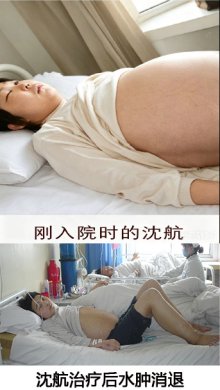
On November 5, 2005, Shen Huian, a farmer from Huludao, Liaoning Province, boarded a train to Qingdao with his critically ill 19-year-old son Shen Hang, who suffered from nephrotic syndrome, holding onto the last glimmer of hope. At that time, Shen Hang was severely edematous throughout his body — pressing his legs left deep pits, and his abdominal skin was cracked with stretch marks like those of a pregnant woman. He experienced chest tightness, shortness of breath, inability to eat or drink, and could not lie flat.
Before this, Shen Huian had received a critical illness notice at every hospital he took his son to. But as a father, he was determined not to give up as long as his son had a breath left. Carrying four critical illness notices, he walked into Qingdao Jingkang TCM Nephrology Hospital. Shen Huian was anxious — he had been recommended to this hospital, hearing that it had effective approaches to treating kidney disease and was willing to accept patients that other hospitals turned away. But with his son so critically ill, he didn't know if his son would leave Qingdao alive.
At this point, Shen Hang's vital signs were extremely weak, and his cardiopulmonary function was failing. He was immediately sent to the emergency room, experiencing multiple convulsions during resuscitation. After more than two days of emergency treatment, Shen Hang narrowly escaped death. President Wang Tiemin personally took his pulse and diagnosed: pale tongue with thin white coating, cold sensation at the Back-Shu and Mingmen acupoints, syndrome of spleen-kidney yang deficiency with fluid retention. Based on the diagnosis, the expert team developed a treatment plan using the "Meridian Kidney-Protection Therapy" to eliminate large amounts of fluid and toxins from the body and urgently protect the patient's kidney function.
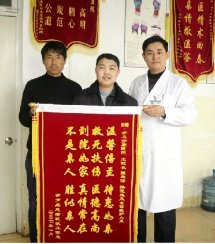
The Shen family began experiencing a treatment method they had never seen before. Following President Wang Tiemin's prescription, nurses brought the "Meridian Kidney-Protection Therapy Device," ground various Chinese herbs into powder, placed them on the device and heated it electrically. Several medical staff lifted the severely edematous Shen Hang onto it. After about ten minutes, Shen Hang let out a long sigh, began sweating on his face, his stomach started gurgling, and he began passing gas with an extremely foul odor. Shen Huian was amazed — ever since his son was diagnosed with kidney disease, he had been terrified of cold, wearing thick clothes even in the hottest weather, never sweating or passing gas, only complaining of bloating and swelling all over! Shen Hang was sweating more and more. When Shen Huian reached under the covers, his son was drenched in sweat.
Duty Director Zhang Xin'an explained that the child had spleen-kidney deficiency, impaired kidney function, and massive proteinuria. Protein is the source of normal life activities, and its loss indicates the kidneys cannot consolidate essence. The more protein lost, the more severe the qi and blood deficiency. If left unchecked, it would lead to nephron necrosis, glomerulosclerosis causing kidney atrophy, and eventually renal failure reaching the uremic stage. Conventional oral medications absorbed through the gastrointestinal tract and circulating through the bloodstream to reach the lesion could actually be harmful to the kidneys. The "Meridian Kidney-Protection Therapy" that Shen Hang was receiving delivered effective Chinese herbs through the Du Meridian and Bladder Meridian on the back, circulating throughout the body. By inducing profuse sweating and gas passage, it eliminated toxins and excess fluid from the whole body. Director Zhang said: "The treatment is already taking effect on him. I believe he will feel much better tomorrow."
That night, Shen Hang slept well, sweating throughout the night until the bed was soaked. Nurses changed his bedding and continued treatment. The next day, Shen Hang could drink water, eat, and get out of bed. His weight dropped by 3 kg, and the tight skin began to show fine wrinkles. A miracle occurred — Shen Hang lost 43 kg of edema fluid, becoming dramatically thinner. His original clothes were now so loose that another person could fit inside them. Shen Hang was thrilled, checking himself in the mirror multiple times a day, growing happier each time.
As time went on, the father and son increasingly felt that Jingkang TCM's treatment approach was different from others. First, the timing of treatment was crucial — it had to be administered at specific times according to the principles of traditional Chinese medicine's "Midnight-Noon Ebb-Flow" theory. Second, the specialists not only examined the tongue coating and pulse but also paid special attention to multiple acupoints along the Du Meridian on his back. Third, very little oral medication was used — external applications were preferred whenever possible, which was particularly beneficial for Shen Hang, who had been taking medications like meals for three years.
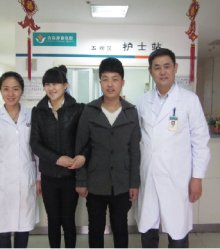
Postscript: Shen Hang was discharged after more than a month of recovery. He continued consolidation treatment for over a year, his condition remained stable, and after discontinuing medication, follow-up has shown no relapse. He is now engaged and living a healthy, happy life.
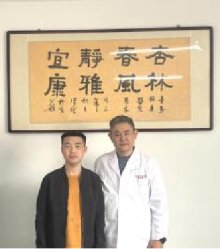
On April 11, 2015, the groom-to-be Shen Hang and his fiancée traveled from Huludao, Liaoning to Qingdao to bring wedding candies to Jingkang Hospital, expressing their deep gratitude.